
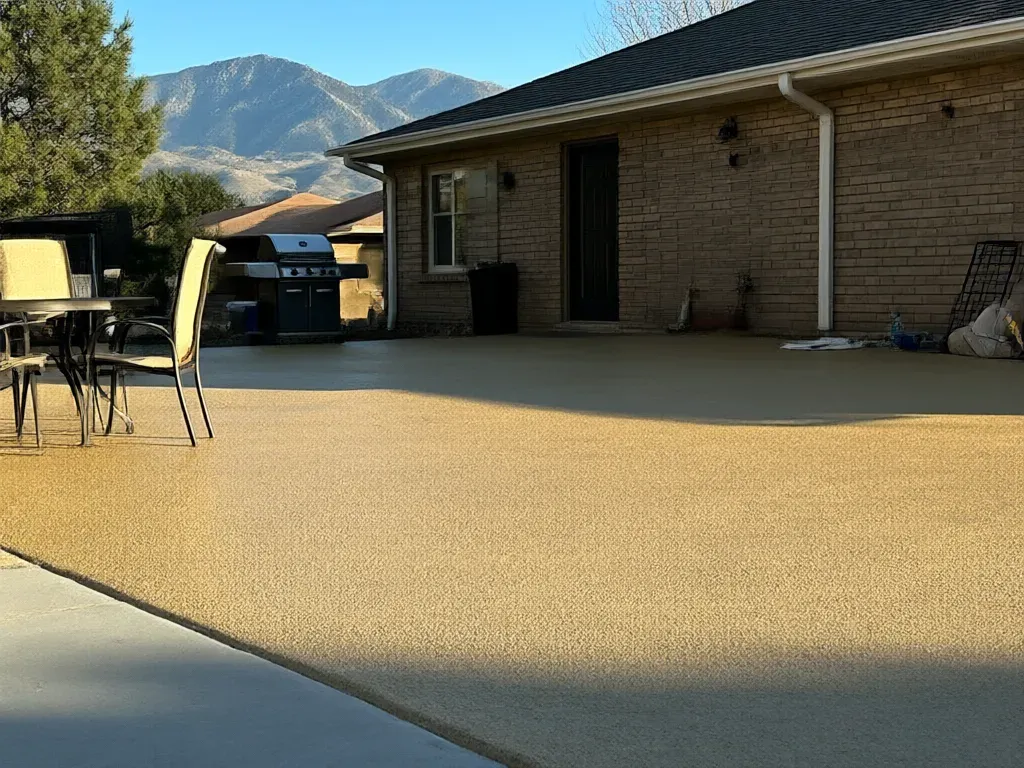
Patio and Outdoor Concrete Coatings in Salt Lake City, UT
Salt Lake City Superior Epoxy Flooring offers professional patio and outdoor concrete coatings in Salt Lake City, UT with 20 years of experience coating slabs that live in the weather. We coat patios, pool decks, porches, walkways and covered entries with a textured polyaspartic system, not plain epoxy, because aromatic epoxy ambers in direct sun. Every slab is diamond ground to CSP 2-3 and every crack is filled before the base coat.
Outdoor coatings get aluminum oxide grit or flake by default, so wet feet and snowmelt don't turn the surface slick. Patio and pool deck coatings run $6 to $9.50 per sq ft and carry a 5-year warranty against peeling and delamination. Here's the catch: a coating resurfaces a sound slab, and it won't fix one that's heaving.
Get a FREE Estimate
Or call (385) 622-8922
Patio and Outdoor Concrete Coating Options
Outdoor slabs get one family of products, UV-stable polyaspartic, in a few different finishes depending on where you'll walk.
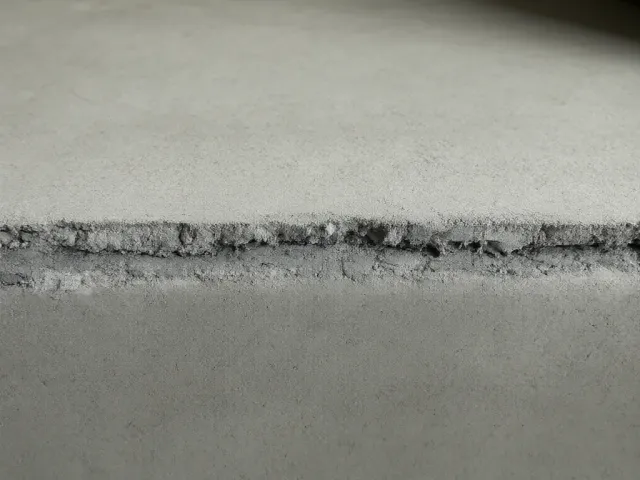
Textured Polyaspartic Patio Coatings
A solid-color polyaspartic system with aluminum oxide grit broadcast into it gives a sandy, non-slip texture. It covers old stains and mismatched patches on a tired patio. Tan, gray and warm stone tones are the common picks.
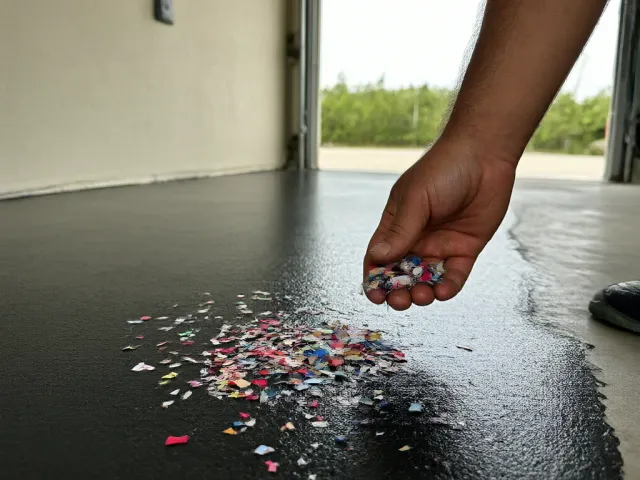
Flake Patio and Porch Coatings
Full-broadcast vinyl flake under a clear polyaspartic top gives the same look as a flake garage floor, with extra grit in the topcoat for bare feet and wet shoes. It works well on covered porches and patios that connect to a coated garage.
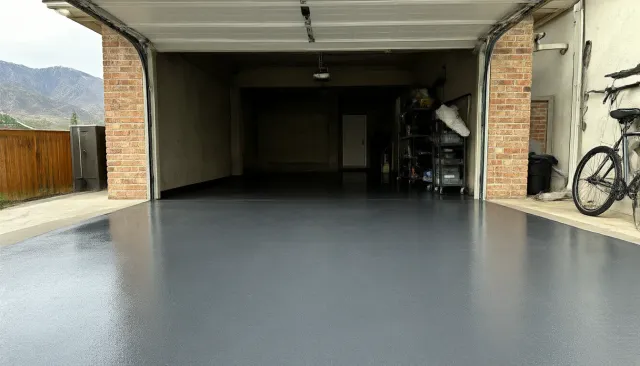
Pool Deck Coatings
Pool decks see bare feet, chlorinated splash and full sun all summer. We use lighter colors, which stay more comfortable underfoot than dark ones, and a heavier grit texture around the coping and steps. Pool deck coatings fall in the same $6 to $9.50 per sq ft range.
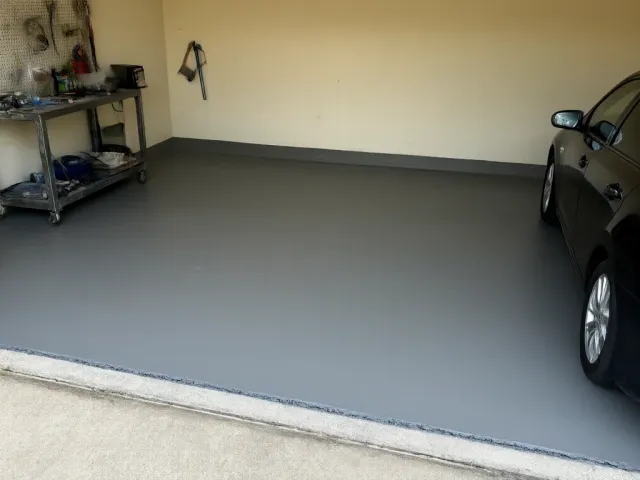
Front Porch, Step and Walkway Coatings
Front steps take snow shovels, boots and winter deicer. We coat treads and risers with grit on every tread and a clean edge at the nosing. It's often paired with a garage floor so the entry matches.
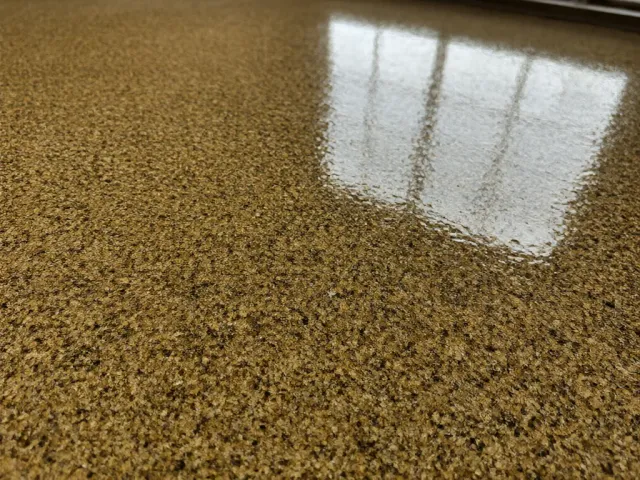
Covered Patio and Three-Season Room Floors
Covered slabs get less direct sun but still see blowing snow and temperature swings. We can use a slightly smoother texture here, and flake or solid color both work. If the space is enclosed and heated, we'll treat it like an interior floor.
Before and After
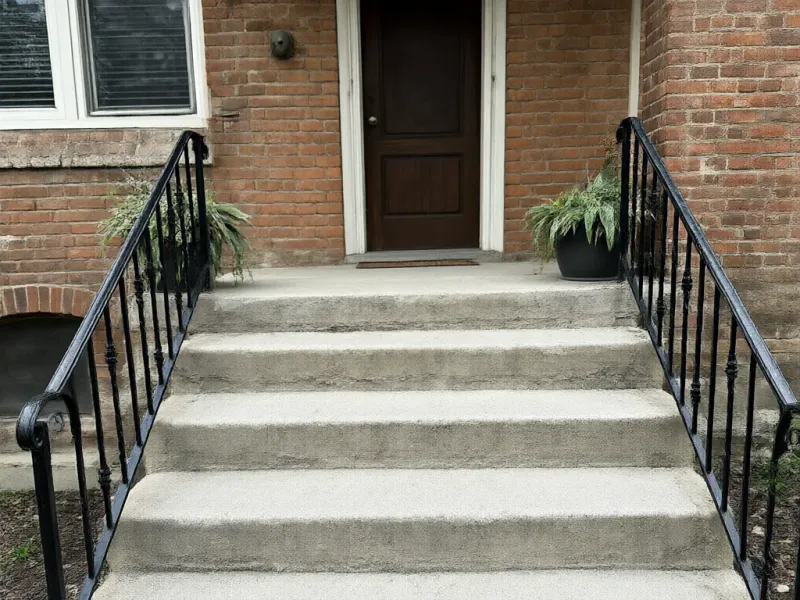
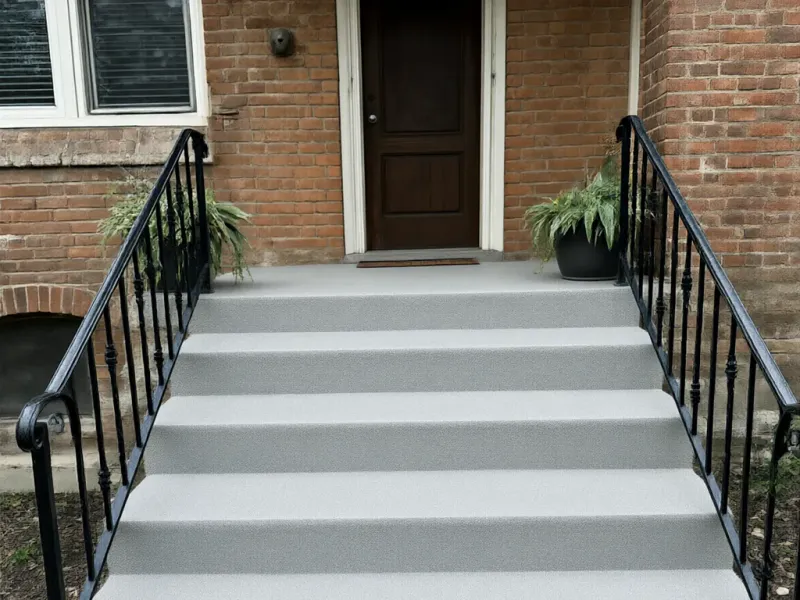
Sun, Snow and Salt on Outdoor Concrete
Salt Lake City sits at 4,327 feet, and sun at that elevation is hard on anything outside. The city also averages 56 days a year at 90°F or hotter. Aromatic epoxy yellows and chalks in those conditions, which is why every outdoor system we install uses aliphatic polyaspartic on top.
Winter is the other half. An average of 127 days at or below freezing means water in the surface of bare concrete freezes and thaws over and over, and that's what scales and pits old patios and steps. A coated surface keeps water and deicer out of the top of the slab.
Dry summer air helps us. Daytime July humidity averages around 22%, so outdoor coatings cure predictably. We schedule outdoor work April through October, on a dry slab with no rain forecast for 24 hours.
When a Patio Can Be Coated, and When It Can't
A coating needs a slab that's sound and staying put. Hairline cracks, stains, light scaling and old sealers are all fine, since we grind, fill and patch them. Slabs that have heaved, sunk or broken into loose pieces are not.
We also look at drainage. A patio that slopes toward the house or holds a puddle after rain will still do that once it's coated, and standing water is hard on any finish. Sometimes the honest answer is a concrete contractor first and a coating later.
Old overlays and painted patios get special attention. If the old layer sounds hollow when we tap it or scrapes off at the edges, it gets ground off to bare concrete before we coat.
Caring for a Coated Patio Through a Utah Winter
Use a plastic shovel blade, not steel, on coated steps and walkways. Steel edges can gouge any coating, and gouges aren't covered by warranty.
Go easy on rock salt. A coated surface handles deicer far better than bare concrete, but sand or a deicer labeled safe for concrete gives grip without leaving heavy salt crust. Rinse the surface in spring once the freezes stop.
The rest of the year, a hose, a soft deck brush and a pH-neutral cleaner are all a coated patio needs. Keep sharp-legged furniture on pads, and move planters now and then so water doesn't sit under them.
Why We're Picky About Outdoor Prep
Outdoor coatings fail at the edges and cracks first, where water gets under the film. So we grind right to the edge of the slab, chase every crack with a diamond blade and fill it before the base coat goes on.
Every grinder runs on a HEPA dust extractor, which keeps the dust off your siding, windows and your neighbour's car. We protect doors, siding and landscaping before we start.
Expansion joints between a patio and the house, or between sections of a walkway, stay flexible. We keep them open or fill them with a flexible sealant rather than coating straight over, because outdoor slabs move more with temperature than garage slabs do. A rigid coating across a moving joint is the first place an outdoor floor cracks.
We also check the slab's moisture before we coat. A patio that was hosed down yesterday or sits in afternoon shade can hold water, and polyaspartic wants a dry surface to bond.
Get a Patio Coating Estimate
Give us a call at (385) 622-8922 or describe the patio in the form. We'll look at the slab, tell you straight whether it should be coated, and email an itemized quote the same day.