
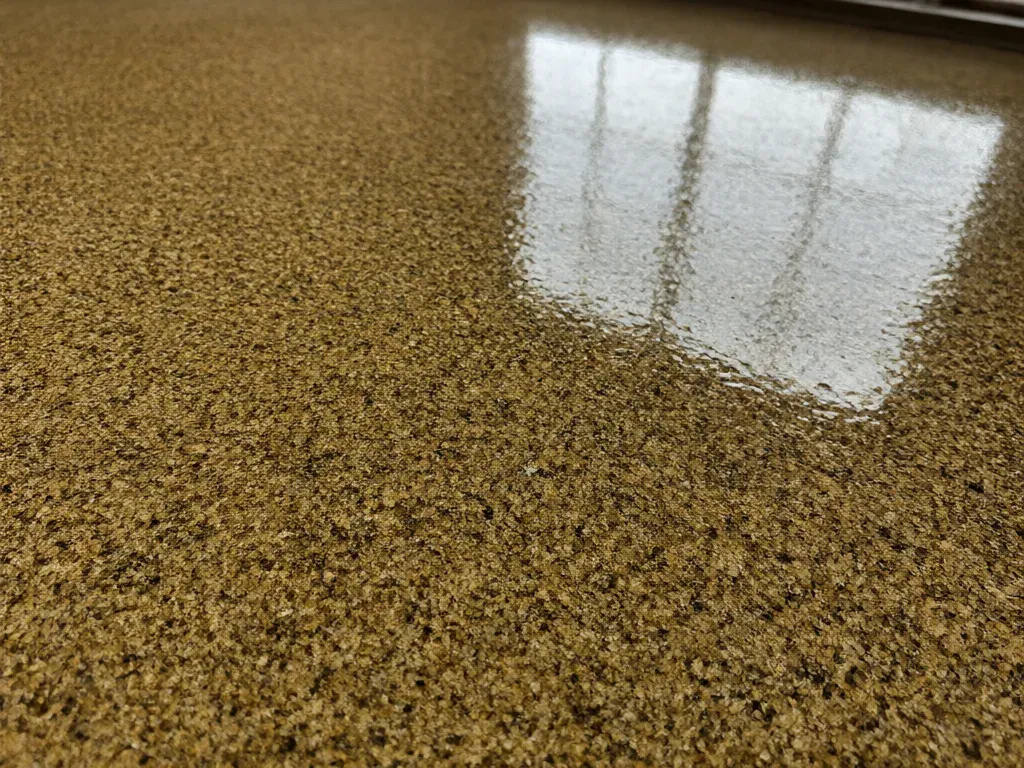
Flake Epoxy Flooring in Salt Lake City, UT
Salt Lake City Superior Epoxy Flooring offers professional flake epoxy flooring in Salt Lake City, UT with 20 years of experience and 4,600+ floors coated since 2006. A flake floor is a 100% solids epoxy or polyurea base coat with colored vinyl flake broadcast into it while it's wet, sealed under a clear polyaspartic topcoat. We broadcast to rejection on every job, so the chips cover the base coat completely.
Full coverage is what gives a flake floor its texture, its thickness and its knack for hiding dust between sweeps. Our standard chip is 1/4-inch vinyl flake, and the finished system runs about 25 mils. Flake epoxy floors run $5.50 to $8 per sq ft on an epoxy base and carry a 15-year residential warranty against peeling, delamination and hot-tire pickup.
Get a FREE Estimate
Or call (385) 622-8922
Flake Epoxy Flooring Systems
The chips are the same vinyl flake in every system. What changes is the base under them, the chip size and where the floor goes.
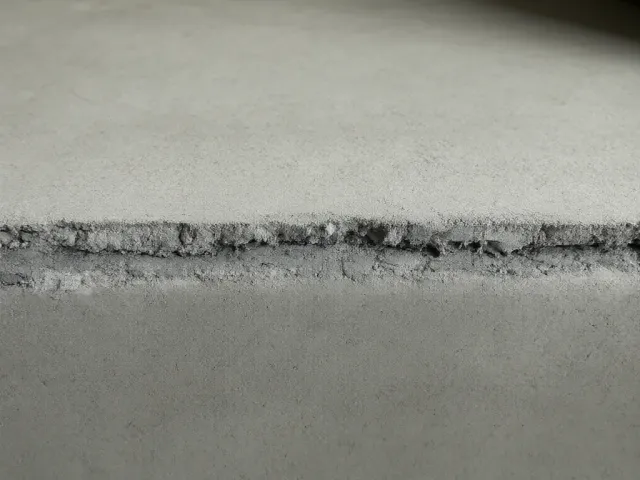
Full-Broadcast Flake Epoxy Floors
Our standard: 100% solids epoxy base, 1/4-inch flake thrown to rejection, scraped, vacuumed and topped with clear polyaspartic. The epoxy base gives a long working time, so the crew can broadcast evenly across a three-car garage. It's a 2-day install, with parking at 72 hours.
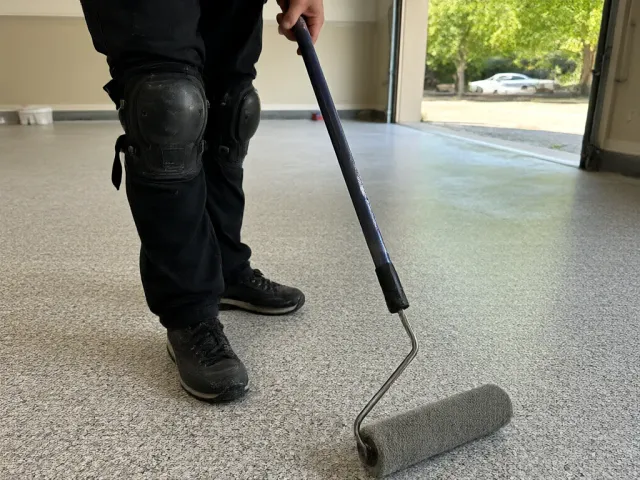
Flake Floors on a One-Day Polyurea Base
The same chips over a polyurea base that cures fast enough to topcoat the same afternoon. It costs a little more, at $6 to $9 per sq ft, and you park in 24 hours. It's what we install in cold garages from November through March.
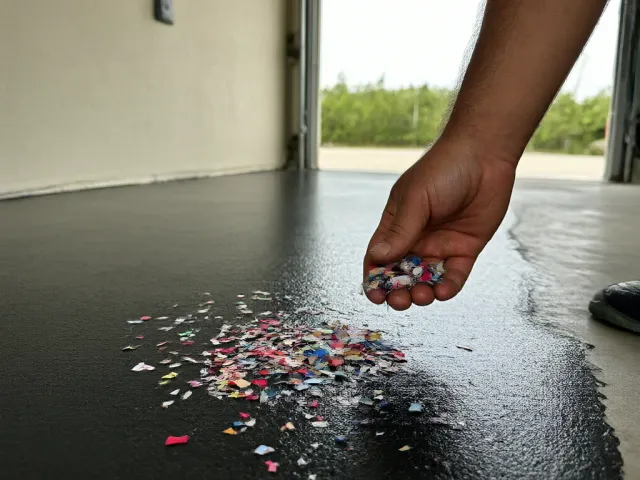
Fine 1/8-Inch Flake Epoxy Floors
Smaller chips read as a tighter, speckled finish instead of a confetti look. We use 1/8-inch flake in laundry rooms, mudrooms and commercial restrooms where the floor is close to the eye. The build and warranty are the same as the 1/4-inch system.
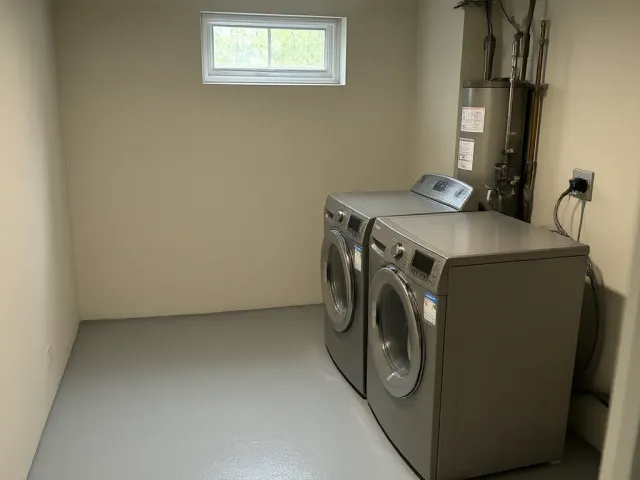
Flake Epoxy Floors for Basements
Basements get a free moisture test first, ASTM F1869 or F2170. If readings run over 3 lbs or 80% RH, a moisture-mitigating primer goes under the flake system. Softer blends in tan and gray keep a basement from feeling like a garage.
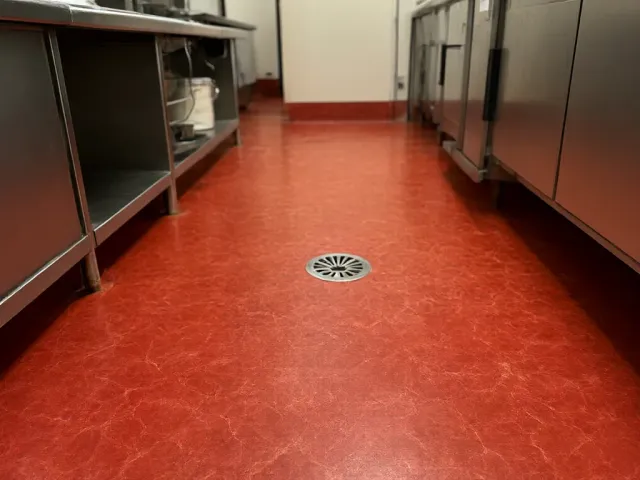
Flake Floors for Restrooms and Locker Rooms
Businesses that want the flake look get the system with an integral cove base at $12 to $20 per linear ft and grit in the topcoat. For heavy wet traffic, we usually point you to quartz broadcast instead, at $8 to $12 per sq ft.
Before and After
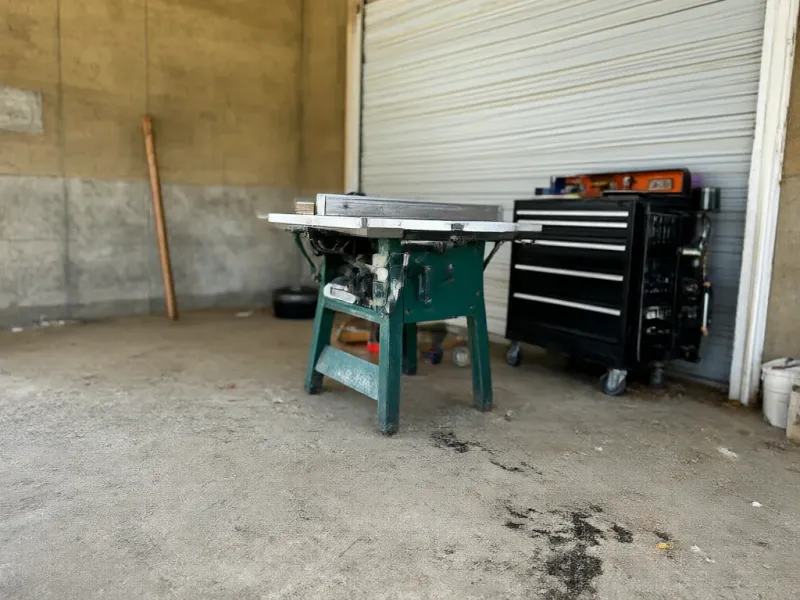
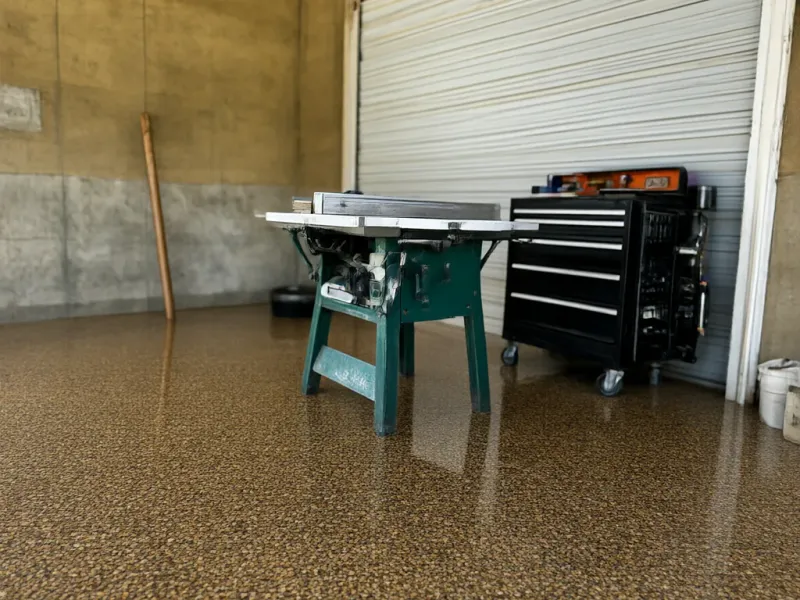
Picking a Flake Blend That Works in a Valley Garage
Flake blends come in grays, tans, browns, blues and mixes with black and white chips. The color you love on a small sample can look different across 450 sq ft, so we lay chip samples on your actual slab at the estimate, with the garage door open.
Think about what lands on the floor. Winter brine dries white, and on a very dark blend that crust shows by the door from December to March. Very light blends show black tire marks. A medium gray or tan with some contrast hides both.
Match the room, not the photo. A blend that works in a gray-sided garage with black cabinets might look cold in a basement with warm wood trim. When in doubt, pick the blend that looks a shade lighter than you think you want, because the clear topcoat deepens every color.
Why Full Broadcast Beats a Light Sprinkle
Some installers sprinkle a handful of flake over a solid color and call it a flake floor. That partial broadcast adds almost no thickness and leaves the solid base exposed between chips. It looks spotty in person and does nothing to hide dust.
Full broadcast means we throw chips until the wet base coat won't take any more. Once it cures, we scrape off every loose chip, vacuum, and lock the rest under the topcoat. The chips add film, texture and color depth at the same time.
It also makes a floor easier to fix later. Because the color is in the chips and not in one flat coat, a spot repair of an impact chip or a hot-tire patch blends in better. We still tell you the truth: a repair at $350 to $900 a visit is close, never a perfect match.
Texture, Grip and Living With a Flake Floor
The topcoat controls the texture. A heavier topcoat over the chips gives a smoother, glossier floor that mops easily. A lighter one leaves more chip texture, which grips better when the floor is wet with snowmelt.
For garages that see a lot of water, or steps into the house, we add aluminum oxide grit to the topcoat. It's a small change in feel that pays off in January.
Day to day, a flake floor needs a squeegee for brine, a soft deck brush or microfiber mop and a pH-neutral cleaner. Avoid harsh acids and solvent degreasers. Wipe up brake fluid or battery acid when it spills instead of letting it sit.
Our Flake Epoxy Flooring Process
Choose the blend
At the estimate, we lay chip samples on your slab and talk through what you park, store and spill, so the blend fits the room.
Grind and profile
Diamond grinding to ICRI CSP 2-3 with HEPA extraction, then crack and spall repair ground flush with the slab.
Roll the base in sections
The crew works in spiked shoes, rolling 100% solids epoxy or polyurea in sections small enough to broadcast while it's wet.
Broadcast to rejection
Chips go down by hand until no base coat shows, then cure. We scrape off every loose chip and vacuum the floor clean.
Seal under polyaspartic
A clear aliphatic polyaspartic topcoat locks the flake in, with grit added where you asked for it.
Flake Epoxy Flooring Questions
What's the difference between a flake floor and a quartz floor?
Flake is thin vinyl chips that give color and texture. Quartz is colored sand, usually double broadcast to about 1/8 inch, and it's harder and grippier. We put flake in homes and quartz in commercial wet areas.
Can I get a custom flake blend?
Yes. We carry standard blends and can mix custom ones from individual colors. Bring a cabinet door or paint chip to the estimate and we'll build a blend around it.
Does a flake floor hide oil and dirt?
It hides dust, light dirt and tire marks better than any solid color. It won't hide a puddle of oil, but oil wipes off the polyaspartic topcoat instead of soaking in like it does on bare concrete.
How thick is a flake epoxy floor?
About 25 mils for our full-broadcast system, roughly ten times what a water-based kit leaves. A mil is a thousandth of an inch, so that's a bit thinner than a credit card.
Can a flake floor go in a basement?
Yes, after a free moisture test. If the slab reads high, the mitigating primer goes in first, and the floor carries a 10-year warranty against peeling, bubbling and delamination.
See Flake Samples on Your Own Floor
Call (385) 622-8922 or use the form. We'll bring chip samples to the estimate and email an itemized quote the same day.