
Basement Floor Epoxy Coating in Salt Lake City, UT
Salt Lake City Superior Epoxy Flooring offers professional basement floor epoxy coating in Salt Lake City, UT with 20 years of experience and a free moisture test on every basement we quote. Basement slabs sit below grade, so vapor moving up through the concrete is the first thing we check, with ASTM F1869 calcium chloride domes or ASTM F2170 in-situ RH probes. The reading decides the system before you pick a color.
Over 3 lbs per 1,000 sq ft per 24 hours or over 80% RH, a moisture-mitigating epoxy primer goes down first, adding $1.50 to $3 per sq ft. Over it we install solid-color epoxy, full-broadcast flake or metallic epoxy, always on a diamond-ground CSP 2-3 profile. A basement of about 800 sq ft runs $4,000 to $6,800, and floors over the mitigating primer carry a 10-year warranty against peeling, bubbling and delamination.
Get a FREE Estimate
Or call (385) 622-8922
Basement Floor Epoxy Options
A basement can be a storage room, a laundry, a gym or the nicest family room in the house. The floor should match how you use it.
Solid-Color Basement Epoxy for Storage and Utility Rooms
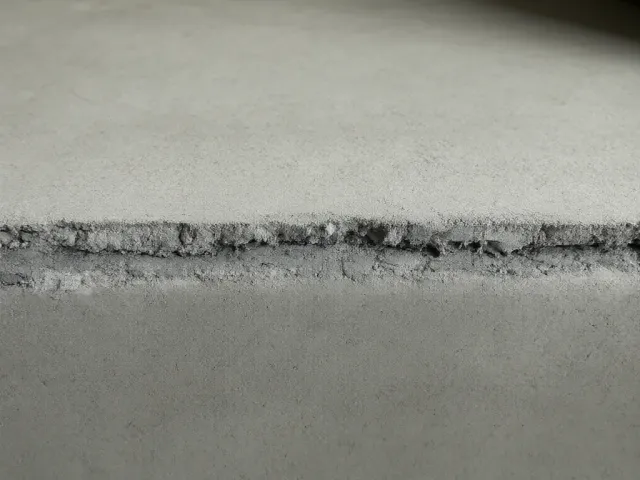
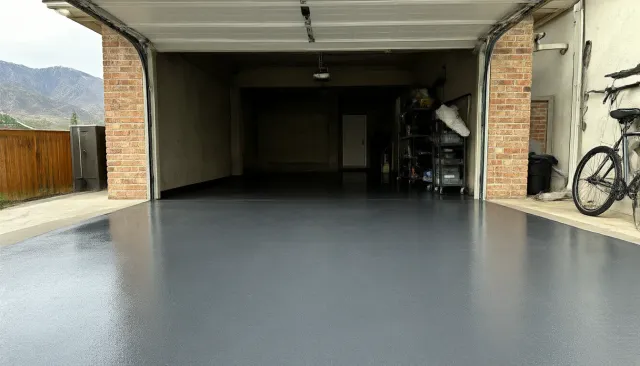
Two coats of pigmented 100% solids epoxy under a urethane or polyaspartic topcoat. It's bright, easy to sweep and makes an unfinished basement feel clean. It's the simplest option inside the $5 to $8.50 per sq ft basement range.
Flake Epoxy Basement Floors
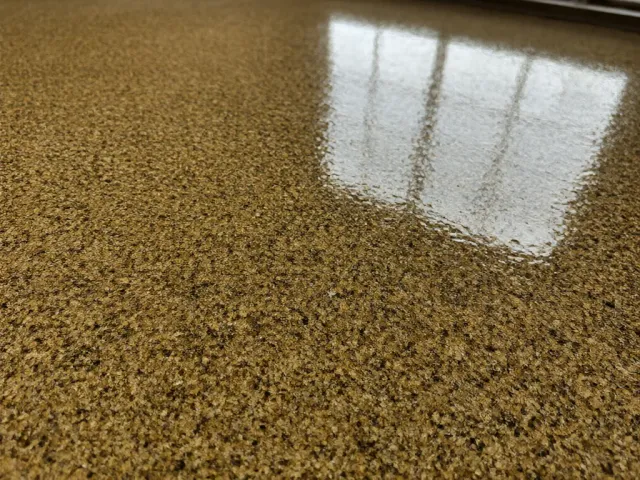
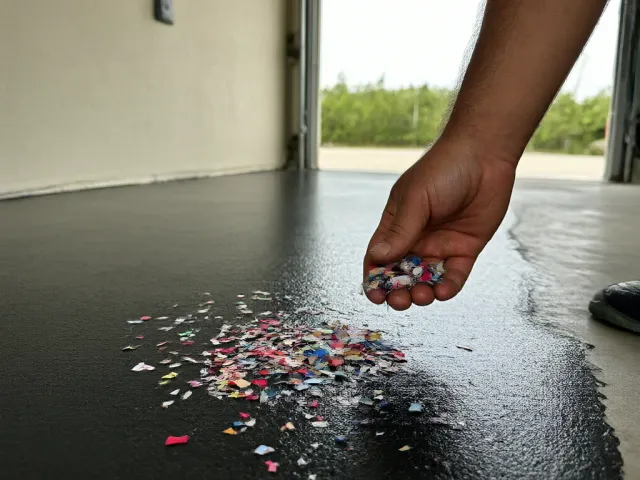
Full-broadcast vinyl flake, about 25 mils total, hides dust and gives a little texture underfoot. Softer tan and gray blends keep it from feeling like a garage. Home gyms often get flake under rubber mats.
Metallic Epoxy Basement Family Rooms
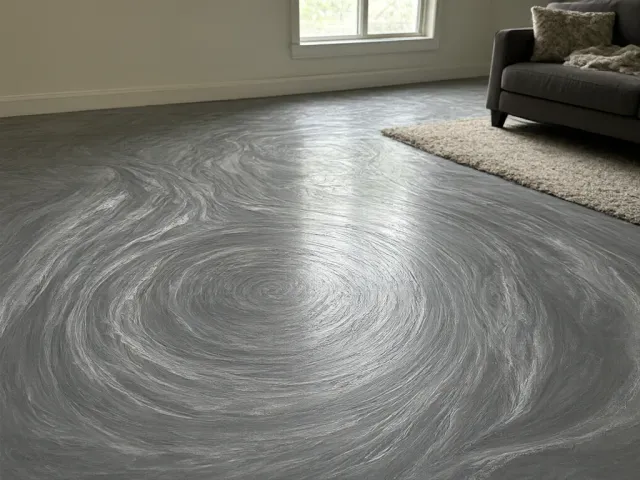
For finished basements, a hand-worked metallic pour at about 30 mils gives a design floor with no grout lines. It's a 3-day install at $9 to $14 per sq ft. We grind off old carpet glue and fill tack strip holes first.
Moisture-Mitigating Epoxy Primer Systems
When the test reads over 3 lbs or 80% RH, a moisture-mitigating epoxy primer goes on the ground slab before any color coat. It's built to hold down vapor that would blister a standard system. It adds $1.50 to $3 per sq ft, or $1,200 to $2,400 on a typical 800 sq ft basement.
Basement Laundry and Mechanical Room Coatings
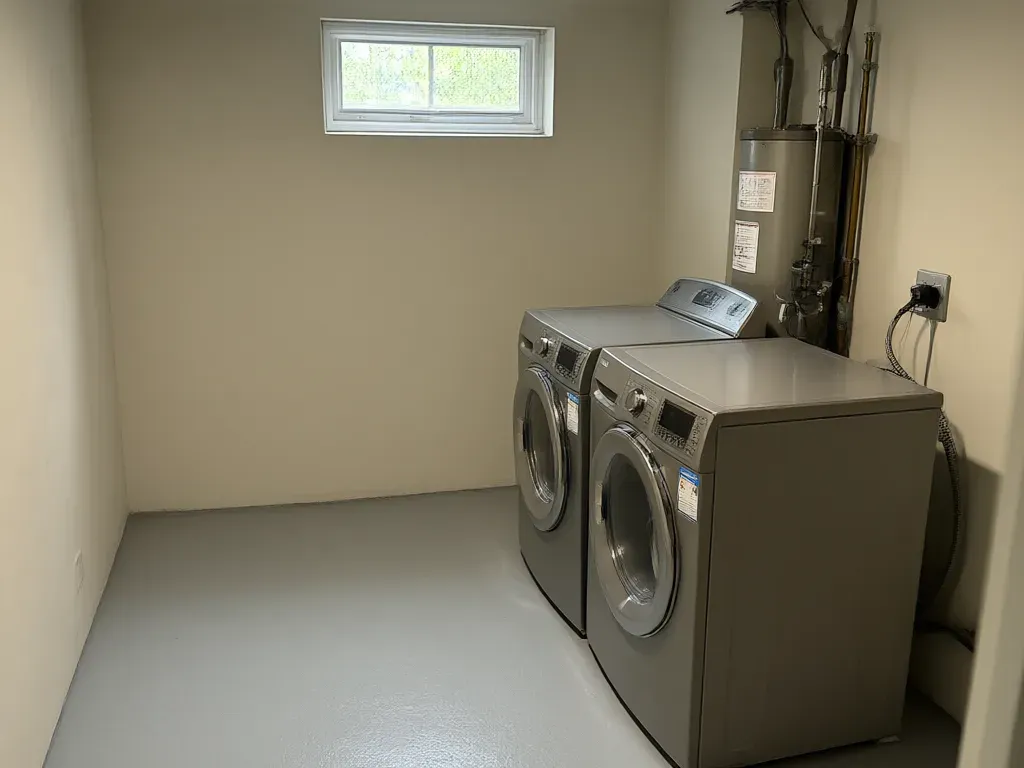
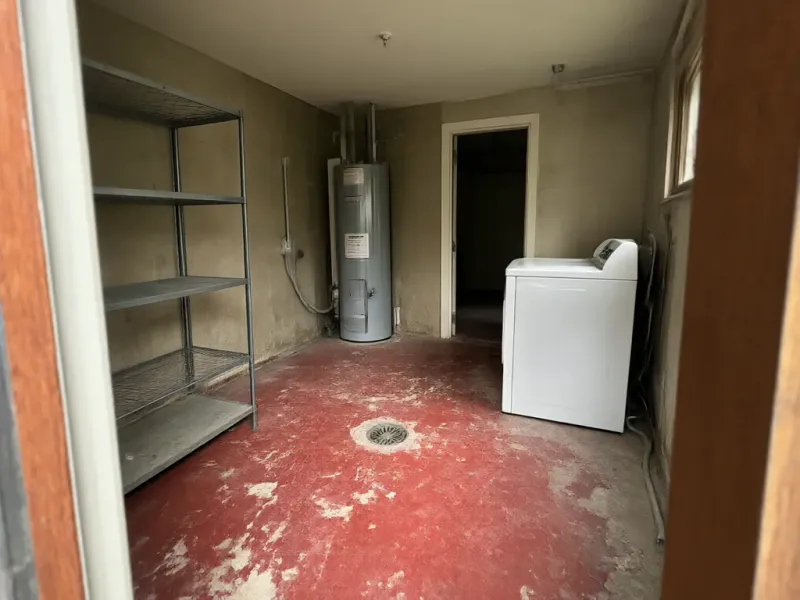
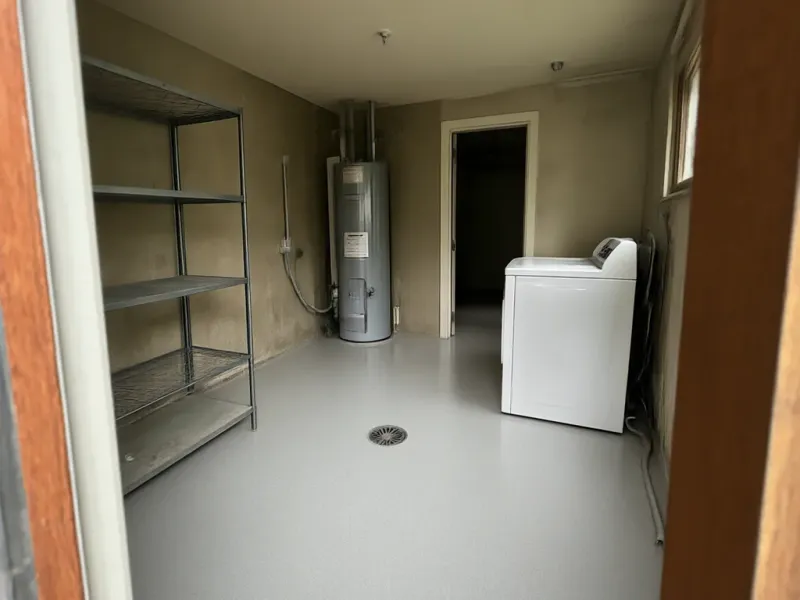
Laundry and furnace rooms see water heater drips, washer overflows and floor drains. We coat right up to the drain with a clean edge and carry the coating up the wall a few inches if you want a splash line. Grit goes in the topcoat around the washer.
Before and After
Why Basement Floor Coatings Bubble
Concrete moves water vapor constantly. In a garage it mostly escapes. In a basement, the slab sits against soil on every side, and the vapor drive can be strong enough to push a coating off from underneath in blisters.
A lot of older basement slabs were poured without plastic sheeting under them, which lets more ground moisture reach the surface. White powder on the floor or the lower walls is efflorescence, salts carried up by water, and it's a hint the slab is moving moisture.
We learned this one the expensive way. In 2008 Jared coated an east bench basement without testing because the homeowner was in a hurry and the slab looked dry. Within a year it blistered near the foundation wall, and he ground it off and redid it at his own cost. Every basement has been tested since.
How We Test a Basement Slab
The test happens before the install, on its own visit, and it's free.
ASTM F1869 calcium chloride
We grind small test spots, seal a dish of calcium chloride under a plastic dome and leave it 60 to 72 hours. The weight it gains tells us how much vapor the slab gives off, in lbs per 1,000 sq ft per 24 hours.
ASTM F2170 in-situ relative humidity
We drill small holes to 40% of the slab's depth, set probes and read relative humidity after a 24-hour equilibration. It reads conditions inside the slab, not just at the surface.
What the numbers mean
At or under 3 lbs and 80% RH, a standard system goes down. Over either line, the mitigating primer goes in first. If you decline the primer after a high reading, we put that in writing and it isn't covered by warranty.
What Basement Floors Look Like Before We Start
Basement slabs in the valley come with history. We find carpet glue, tack strip holes, old paint, self-leveler patches, and the occasional patch of vinyl tile somebody never pulled up. All of it gets ground off or filled, because a coating is only as good as what it's bonded to.
We work around window wells, floor drains, sump pits and the base of the furnace and water heater. Appliances that can't move get a clean edge around them. If you're finishing the basement, coat the floor before the drywall goes up and you'll get cleaner edges and less to protect.
Every grinder runs on a HEPA dust extractor. On a basement job that matters, because a stairwell carries dust straight into the rest of the house.
Radon, Leaks and Things a Coating Won't Fix
An epoxy floor is not radon mitigation. Utah licenses radon mitigation as its own specialty, so if your radon test came back high, get a mitigation system in first. We'll coat around the suction point afterward.
A coating also won't stop liquid water. If water comes through a crack or seeps along the wall joint after a storm or a spring snowmelt, that's a drainage or waterproofing problem, and it needs fixing before any floor goes down. We'll tell you if that's what we see.
Living on the floor afterward is easy. Walk on it at 24 hours, move furniture back at 72, and wait until the full 7-day cure before laying rugs. Clean with a damp mop and a pH-neutral cleaner.
Book a Free Basement Moisture Test
Call (385) 622-8922 or send us the form. We'll test the slab, measure the space and email an itemized basement floor quote once the readings are in.